


Solve the RWX Gap with Lightbits SDS, the Fastest, Simplest, Shared Block Storage for OpenShift Virtualization
What is OpenShift Virtualization? OpenShift-V is a feature of the Red Hat® OpenShift® platform, built on the KubeVirt open-source project, that allows you to run and manage VMs alongside containers on a single Kubernetes-native platform. It’s an excellent VMware migration option. Instead of maintaining a separate silo for virtualization (like VMware vSphere) and another for containers, VMs are managed just like a containerized application.
Does OpenShift-V require specialized storage? You don’t need specialized storage, but you do need storage that supports Container Storage Interface (CSI) and ReadWriteMany (RWX) in Block Mode if you want to move running VMs between servers—which is usually the main reason people use virtualization in the first first place.
What storage options are available for OpenShift Virtualization? If you are building a performance-first cloud-native data center, augmenting ODF/Ceph for better block performance, or moving away from Fibre Channel SAN Lightbits software-defined OpenShift Virtualization storage solution is your answer. It’s the most innovation solution that solves the RWX block problem for high-performance, latency-sensitive workloads. Here’s why:
- The NVMe/TCP Advantage: Legacy systems (ODF/Ceph and SANs that rely on iSCSI or Fibre Channel) carry a “latency tax” and complexity at scale. Lightbits block storage runs on standard commodity x86 servers and leverages existing TCP/IP networks, eliminating the need for expensive, specialized equipment while delivering the blistering speed of local NVMe over your existing standard Ethernet network.
- Fast Live Migration of VMs: The Lightbits CSI driver is specifically designed to handle the RWX Block requirement natively. Our benchmark tests have demonstrated the ability to live-migrate VMs under massive IOPS loads with near zero stun time. To learn more read the blog: Live Migration Without the Drama: 1.2M IOPS on OpenShift-Virt.
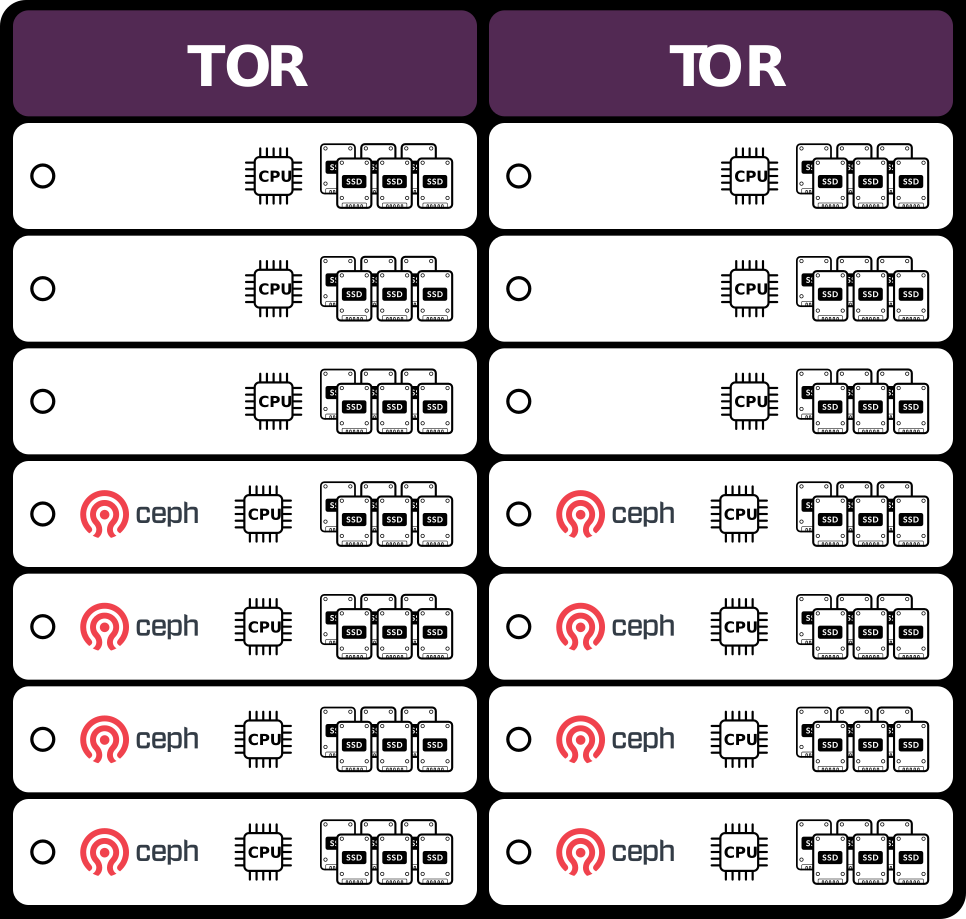
- Better Resource Efficiency: Legacy systems are resource hogs; consuming significant amounts of CPU and RAM from your worker nodes to run the storage cluster. Lightbits is disaggregated storage. One Lightbits cluster can serve multiple OpenShift clusters, so your OpenShift nodes can spend 100% of their resources running your VMs and containers, not storage. With Lightbits you can consolidate more workloads onto fewer servers, maximizing your hardware investment and eliminate data center sprawl.
Lightbits provides an fast and cost-efficient platform for modern application development delivering the speed direct-attached SSDs with the manageability of networked storage. Tailored for organizations seeking to modernize their data centers for efficiency, flexibility, and performance by combining software-defined storage with open-source solutions like OpenShift-V to run both containerized and virtualized workloads side by side.
5 Reasons Why Lightbits Block Storage is Ideal for OpenShift Virtualization
Unmatched Parallel Performance
Lightbits storage software enables you to effortlessly create hundreds of new PVCs at scale without compromising IOPS or increasing latency for your running applications.
Peak Performance for Every PVC
Lightbits ensures unmatched IOPS and ultra-low latency, delivering industry-leading performance at scale even when demand surges and the volume of PVCs grows exponentially.
Effortless Live Migration with KubeVirt
With Lightbits’ integrated CSI driver, live migration with KubeVirt is seamless and powerful, ensuring smooth migrations and effortlessly handling VMs with multiple PVCs.
Seamless Multi-Tenancy and Encryption
Lightbits delivers robust multi-tenancy and encryption eliminating complexity so you can focus on applications while maintaining optimal security and scalability.
Scalability, Resiliency and Cost Effectiveness in Virtualization Storage
Lightbits’ disaggregated architecture enables independent scaling of compute and storage, offering unparalleled flexibility to meet evolving workloads and business needs. HA is ensured through seamless storage server failover, safeguarding business continuity even during hardware failures. By leveraging standard Ethernet networks and NVMe/TCP, Lightbits reduces infrastructure costs while extending SSD lifespans with Intelligent Flash Management.
What Types of Workloads Run on OpenShift Virtualization with Lightbits?
- Legacy Monolith Applications: Easy Migration from VMware
- GPU-Heavy AI/ML: Maximum IOPS for Inference & Training
- Statefull Databases (e.g., Oracle DB, PostgreSQL): RWX Block for Live Migration
- CI/CD Pipelines: Fast Cloning of “Golden Images”
- Telco/Edge & Load Balancers: Ultra-Low L:atency
What is the Difference Between OpenShift Virtualization and VMware?
- The Management Philosophy: vSphere vCenter (ClickOps) versus Kubernetes Operators (GitOps)
- Resource Management: VMware Hypervisor (ESXi) on bare metal versus KVM
- HA & Clustering: OpenShift treats a VM crash more like an application failure, whereas VMware treats it as a hardware/infrastructure event
- Storage Integration: VMware is built and optimized around vSAN. Any storage that supports CSI can integrate with OpenShift-V
High-Performance Block Storage for OpenShift Virtualization
While Ceph is a solid choice for general-purpose workloads where unified object/file/block access or lower performance demands are acceptable, your mission-critical, latency-sensitive workloads—like SQL, NoSQL, and Vector databases—demand a specialized engine.
By integrating Lightbits alongside Ceph in OpenShift-V environments, you gain the ultimate architectural flexibility. Our software-defined approach allows you to standardize your hardware procurement on a single server specification while deploying the right storage protocol for the right job.
Ready to optimize your OpenShift data plane?
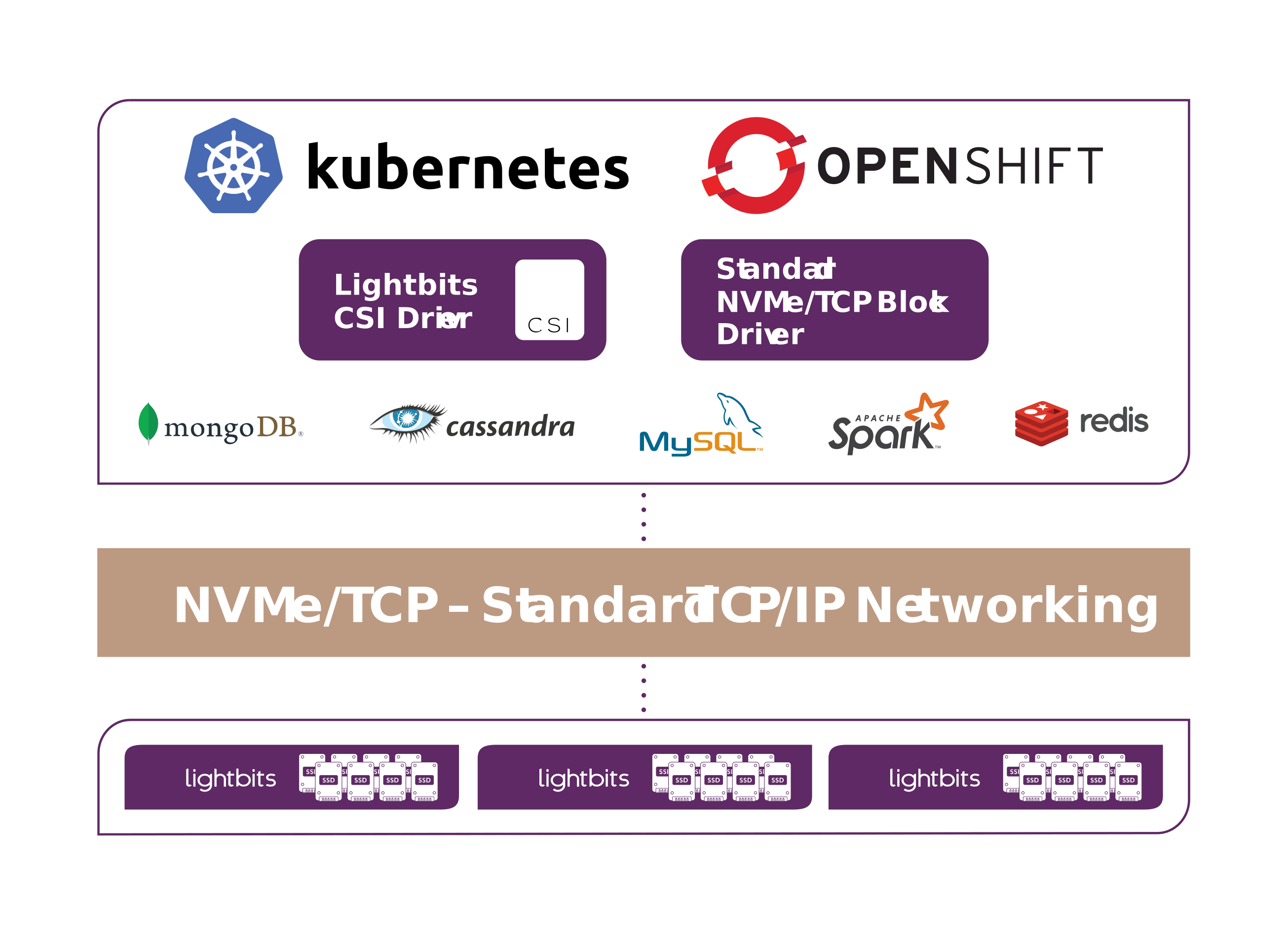
Seamless Integration with OpenShift and Kubernetes Environments
Lightbits CSI driver integrates seamlessly with Kubernetes and OpenShift Virtualization environments allowing you to easily provision and manage high-performance, disaggregated and persistent storage for your VMs.
- CSI driver for simple orchestration
- Supports thousands of applications
- Consistent low latency for cloud-native workloads
- Highly available persistent volumes
- Requires no changes to network
- No proprietary drivers on K8s servers
- Block storage with RWO or RWX capabilities
- End-to-end encryption
- Built-in snapshots and clones
Accelerate Live Migrations in OpenShift Virtualization
Excerpted from a blog published on the Red Hat website, March 24, 2025, “High-performance storage for OpenShift Virtualization: A review of Lightbits Labs“
One of the biggest challenges in virtualization is maintaining high-performance storage while enabling live migration. As network bandwidth advances and Ethernet technology innovations continue, organizations will move away from the constrained limitations of traditional FC SAN to more flexible and scalable network-based storage, with NVMe/TCP a clear frontrunner. The Lightbits Labs team showed how their storage minimizes the impact of live migration and provides continuous and stable access to the backend storage, allowing for the uninterrupted running of VMs on Red Hat OpenShift Virtualization.